

Beyond Personality Tests: How Extended DISC Helps Teams Communicate, Lead and Perform
Posted on 21 April 2026
Most leaders and HR professionals have, at some point, run a behavioural or personality profile across their team. The session is usually energising. People learn their letter, colour or type, share a few laughs about how accurate it is, and walk out feeling like they understand each other a little better.
Then, a few weeks later, the report ends up in a drawer. The language fades from team conversations. The insight quietly disappears.
If that pattern feels familiar, it's not because behavioural assessments don't work. It's because most are used as a one-off labelling exercise rather than as an ongoing tool for communication, leadership and performance.
Extended DISC was designed to be different. Used in more than 70 countries and translated into over 80 languages, it's one of the most widely validated and practically applied behavioural assessments in the world. Done well, it doesn't just tell people who they are - it changes how they work together.
In a working environment that is more hybrid, more change-driven and more relationally complex than ever, that distinction matters. The teams that consistently outperform are not the ones with the most talented individuals - they are the ones who understand each other well enough to communicate quickly, decide cleanly and recover from friction without lasting damage. Extended DISC is one of the most direct, practical tools available for building that kind of team.
1. The behavioural blind spot most teams have
Most workplace tension isn't about competence. It's about style.
A direct, results-focused leader can be perceived as cold by a relationship-focused team member. A warm, people-first manager can be seen as soft by a data-driven analyst. Two capable, well-intentioned people end up frustrated with each other - and neither can quite name why.
This blind spot becomes especially costly under pressure. When deadlines tighten and stress rises, people default to their natural behavioural style. Communication shortcuts appear. Assumptions multiply. Misreads happen quickly.
Extended DISC gives teams a shared, non-judgemental language for these moments. Instead of personalising friction, people start to see it as a difference in style - something that can be understood and worked with rather than something to be fixed.
That shift matters because it changes the conversation. "You're being difficult" becomes "we're approaching this from different angles". Defensive responses soften. Curiosity replaces judgement. And the team starts to use difference as a strength rather than experiencing it as a constant source of friction.
2. What Extended DISC actually measures
At its core, Extended DISC measures four behavioural styles:
D - Dominance: direct, decisive, results-driven
I - Influence: outgoing, enthusiastic, people-oriented
S - Steadiness: patient, supportive, consistent
C - Compliance: analytical, precise, quality-focused
Most people have a blend of styles, with one or two dominant preferences. There is no "best" or "worst" style. Every preference brings genuine strengths and predictable challenges.
What makes Extended DISC particularly useful is how it interprets the gap between someone's natural style (how they're hardwired to behave) and their adjusted style (the behaviour they are demonstrating in their current environment). A small, sustained gap usually signals fit and engagement. A large, sustained gap is often an indicator of role misalignment, burnout risk or cultural friction - it appears in their ED Profile long before it shows up in performance reviews.
For HR leaders, this is one of the most actionable insights an assessment can offer.
3. Where Extended DISC delivers the biggest impact
In our work with Australian organisations across professional services, healthcare, manufacturing, education and not-for-profits, four use cases consistently deliver the strongest return:
Leadership development
Self-aware leaders adapt. Extended DISC helps leaders see how their natural style lands with different team members, where they're likely to be misread, and how to flex without losing authenticity. It also makes feedback conversations significantly more productive, because both parties have a shared framework for the discussion.
Team alignment and culture
Team profiles surface the collective behavioural makeup of a group - the strengths it can lean into, the blind spots it shares, and the decision-making patterns it tends to fall into. This is invaluable when teams are forming, restructuring or working through change. Extended DISC's new Team Culture Reports bring a completely new dimension to these activities.
Recruitment and role design
Extended DISC helps clarify the behavioural demands of a role - not as a pass or fail filter, but as a thoughtful overlay alongside skills, experience and values fit. The right behavioural match accelerates onboarding and reduces early-stage attrition.
Coaching and one-to-one conversations
For coaches, OD specialists and people leaders, Extended DISC is a fast, evidence-informed entry point into deeper conversations about strengths, energy, motivation and growth edges.
A useful way to think about it: most behavioural assessments answer the question "who is this person?" Extended DISC answers a more practical question - "how do we get the best out of this person, in this role, with this team, right now?" That subtle shift is what makes the insight practical.
What makes Extended DISC different
There are dozens of behavioural and personality tools on the market. Three things consistently set Extended DISC apart for HR and OD professionals:
First, it measures the gap. The natural-versus-adjusted style comparison gives you context most assessments don't. You're not just seeing who someone is - you're seeing how much they're stretching to fit their current role and environment. ED also identifies what affect making this adaptation is having on the employee.
Second, it's pragmatic. Reports are written in plain, business-friendly language. Recommendations are specific and actionable. People can use the insight the same week they receive it, not months later after a deep theoretical training program.
Third, it scales. The same framework can support an individual coaching engagement, a leadership team offsite, an enterprise-wide culture initiative or an internal HR capability build. That consistency makes Extended DISC easy to embed and easy to sustain.
4. Getting started: how to use Extended DISC well
The difference between an Extended DISC engagement that lifts performance and one that gathers dust usually comes down to four practical choices:
1. Frame it as a development tool, not a label. Make it clear from the start that the goal is awareness and adaptability, not categorisation.
2. Debrief well. A high-quality debrief - whether one-to-one or in a team setting - is what turns a report into insight. Generic interpretations rarely shift behaviour.
3. Build it into the way you work. Use the language in team meetings, feedback conversations, project kick-offs and onboarding. The more it shows up in everyday work, the more it changes everyday behaviour.
4. Revisit it. Behavioural styles are relatively stable, but contexts change. Reviewing Extended DISC insights during role transitions, team restructures or leadership development programs keeps the tool relevant and the insights fresh.
Practical takeaways
- Most workplace friction is a style mismatch, not a competence problem - and that's solvable.
- Extended DISC is most powerful when used as an ongoing language, not a one-off workshop.
- The gap between someone's natural and adjusted style is one of the earliest, most actionable signals of role fit, engagement and burnout risk.
- Strong debriefs and embedded use are what create lasting behaviour change - not the report itself.
Ready to put Extended DISC to work in your organisation?
Whether you're an HR leader looking for a shared behavioural language across your business, a coach wanting a more rigorous tool in your kit, or a business owner trying to get a high-performing team firing on all cylinders, Extended DISC offers a practical, evidence-based way forward.
At Talent Tools we offer Extended DISC certification, individual and team reports, team workshops, leadership programs and tailored workshops - designed to translate insight into measurable workplace impact.
Get in touch to talk through what would work best for your team.
Related Stories
 "Team Dynamics Assessment Frameworks: Understanding How Your ...")
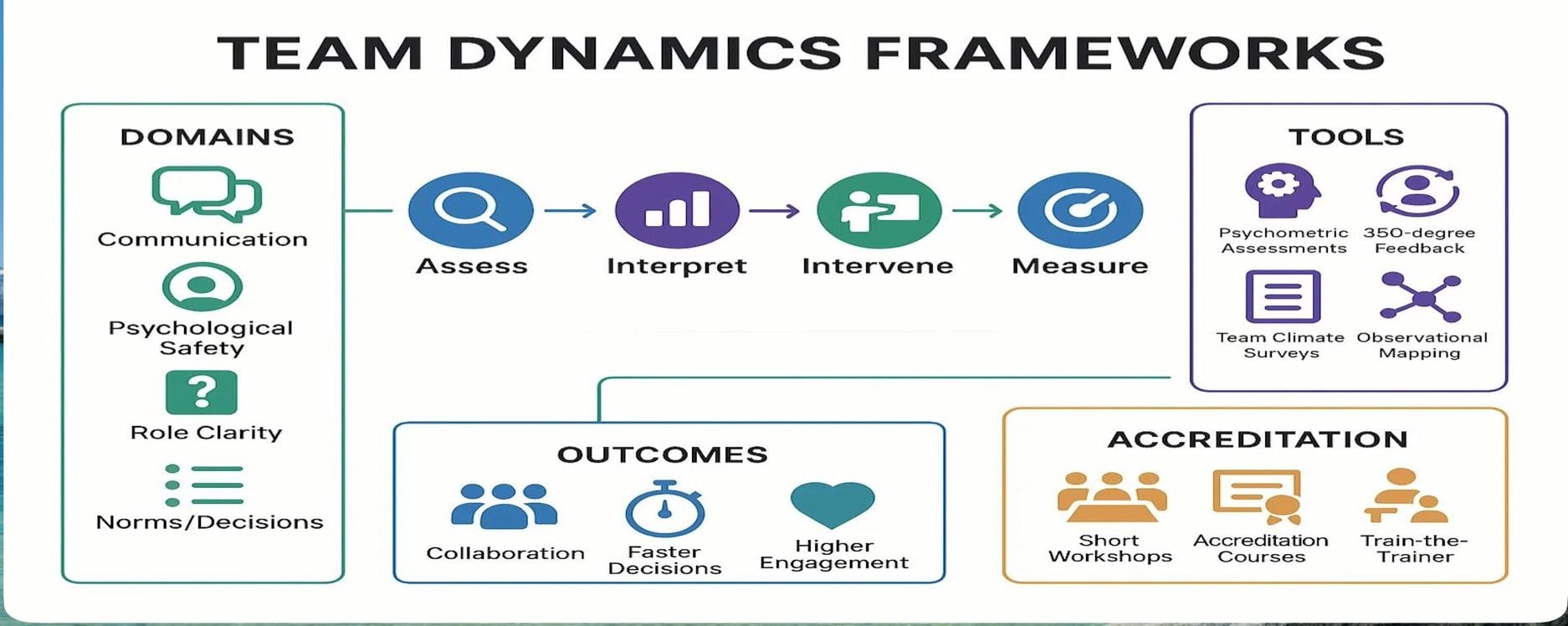
Team dynamics assessment frameworks are structured approaches that reveal how groups interact, make decisions, and deliver work. They show how these behaviours link directly to focused development actions, driving measurable change.These frameworks map core components suc...
Read More "360 Degree Feedback Reporting Update")
There is a brand new way to view and generate reports in Open 360 - Using Open Preview. What You Need to KnowThe previous reporting method has been retired, and now all feedback results and reports will be accessed exclusively through the Open Preview ...
Read More "Why I wrote the Psychological Safety & DISC Styles Handbook")
Workplace wellbeing is no longer defined solely by physical safety. In Australia, New Zealand, and Singapore, regulatory changes now emphasise the importance of psychological and psychosocial safety in achieving sustainable performance. These frameworks, however, often st...
Read More "New Hope for Team Leaders")
New Hope for Team LeadersI bet your Leaders do not love the leadership they provide for their team members right now.I also bet you know you could all do a much better job leading your teams if you had the time, tools and support you need. So what's stopping you all?I've wr...
Read More "CliftonStrengths V Extended DISC")
This week, a client asked me,"How Extended DISC compare with the Clifton Strengths Finder" (recently rebranded as CliftonStrengths)?My simple answer is, "they don't compare".They are different.CliftonStrengths, is a stand-alone and specialist strengths-identifying to...
Read MoreTeam dynamics assessment frameworks are structured approaches that reveal how groups interact, make decisions, and deliver work. They show how these behaviours link directly to focused development actions, driving measurable change.These frameworks map core components suc...
Read MoreThere is a brand new way to view and generate reports in Open 360 - Using Open Preview. What You Need to KnowThe previous reporting method has been retired, and now all feedback results and reports will be accessed exclusively through the Open Preview ...
Read MoreWorkplace wellbeing is no longer defined solely by physical safety. In Australia, New Zealand, and Singapore, regulatory changes now emphasise the importance of psychological and psychosocial safety in achieving sustainable performance. These frameworks, however, often st...
Read MoreNew Hope for Team LeadersI bet your Leaders do not love the leadership they provide for their team members right now.I also bet you know you could all do a much better job leading your teams if you had the time, tools and support you need. So what's stopping you all?I've wr...
Read MoreThis week, a client asked me,"How Extended DISC compare with the Clifton Strengths Finder" (recently rebranded as CliftonStrengths)?My simple answer is, "they don't compare".They are different.CliftonStrengths, is a stand-alone and specialist strengths-identifying to...
Read More