
Team Dynamics Assessment Frameworks: Understanding How Your ...
Posted on 24 December 2025
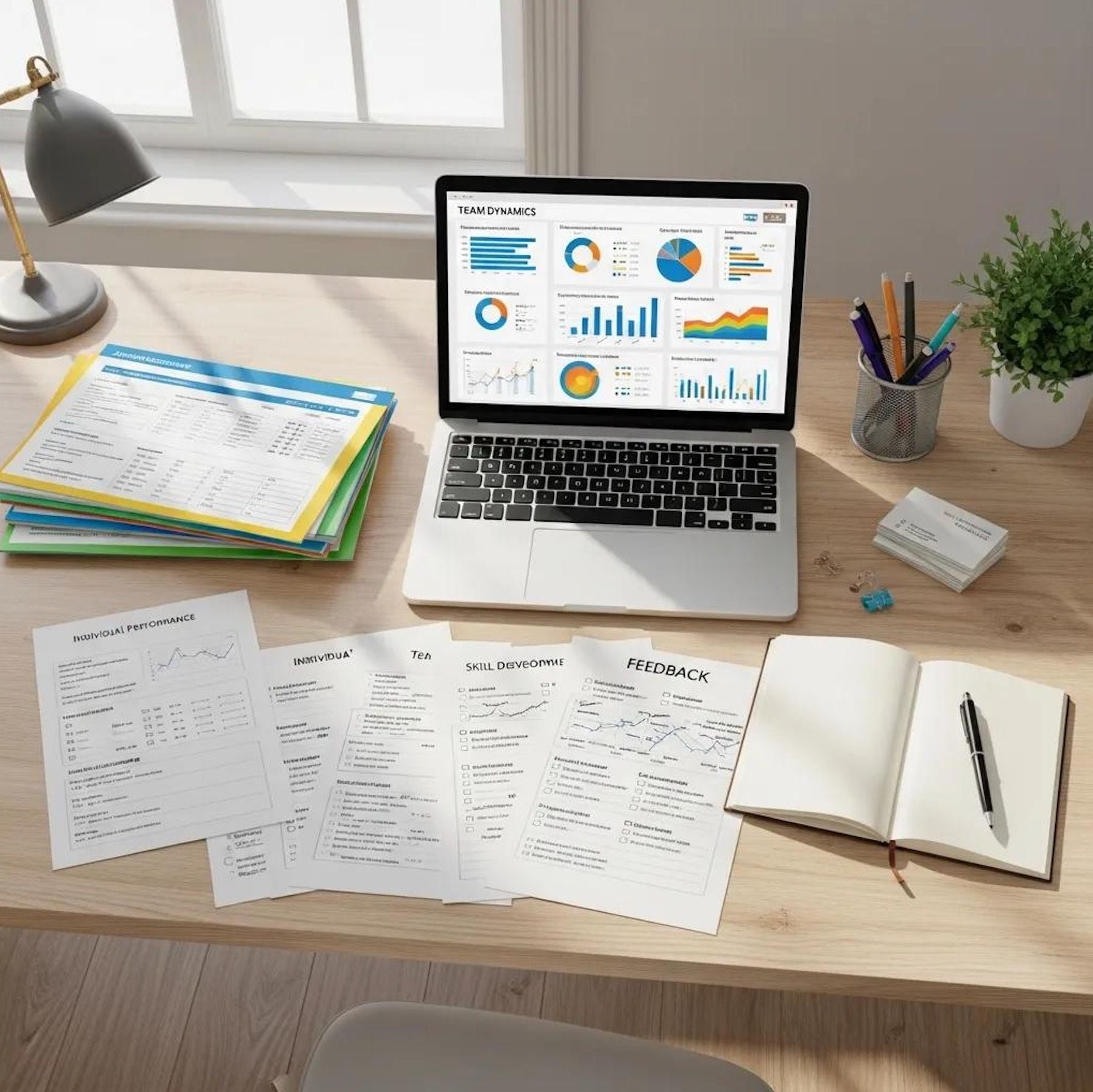
Team dynamics assessment frameworks are structured approaches that reveal how groups interact, make decisions, and deliver work. They show how these behaviours link directly to focused development actions, driving measurable change.
These frameworks map core components such as communication patterns, role clarity, psychological safety, and decision processes to measurable indicators. This reveals both strengths and friction points, providing practical insights organisations can use to improve collaboration, productivity, and retention through evidence-based interventions.
In this comprehensive guide, we explain what these frameworks measure, compare common team assessment tools, and demonstrate how to translate assessment outputs into effective intervention plans. You’ll also find expert advice on choosing valid tools, tracking communication and cohesion, and understanding how accreditation and workshops empower HR teams and coaches to apply assessments successfully. We use terms like team performance assessment, psychometric assessments, and positive psychology team tools to connect practical advice with current research and practitioner language.
What Are Team Dynamics Assessment Frameworks and Why Do They Matter?
Team dynamics assessment frameworks are formal models that define what to measure at the group level, how to measure it, and how to translate results into development actions. They combine multiple sources of data — surveys, observation, and psychometric inputs — enabling organisations to diagnose root causes of dysfunction and prioritise interventions effectively.
The main benefits of a clear framework include a direct link from input to intervention, standardised measurement for tracking change, and better decisions about team design and coaching priorities. A consistent framework also reduces the risk of one-off fixes by linking observed behaviours to validated constructs and interventions that deliver measurable improvements.
Team dynamics assessments deliver tangible outcomes for organisations:
- Clearer collaboration and role definition that cut task duplication and interpersonal friction.
- Stronger psychological safety that speeds learning and supports innovation.
- Tighter alignment between team norms and organisational goals improves productivity.
- Data-driven routes for coaching and structural change that support retention.
These benefits underscore why embedding a consistent assessment framework matters. The next section explains how dynamics directly affect workplace performance and what to measure to capture those effects.
How Do Team Dynamics Influence Workplace Performance?
Team dynamics shape everyday behaviours that directly affect outputs, so measuring them reveals the mechanisms behind performance differences. Communication patterns determine coordination: clear, frequent exchanges reduce rework and shorten decision cycles, whereas poor communication leads to delays and mistakes. Role clarity prevents duplicate effort and conflict, freeing teams to focus on value-added work rather than repeatedly negotiating responsibilities. Norms around feedback and problem-solving influence learning: teams that normalise constructive feedback adapt faster and sustain higher performance. Understanding these causal chains: dynamic ? behaviour ? outcome, helps practitioners choose interventions that address root causes rather than surface symptoms.
Research commonly finds that teams with structured decision processes and explicit role agreements report higher productivity and lower turnover. Recognising these mechanisms points to the elements a robust assessment should capture, which we cover next.
What Key Elements Are Measured in Team Dynamics Assessments?
Team dynamics assessments usually measure a core set of domains that together explain effectiveness and cohesion. Typical domains include communication clarity and patterns, psychological safety and trust, role clarity and responsibilities, team norms and decision-making, and alignment to goals and metrics. For each domain, assessments use concrete indicators — for example, frequency of clarifying questions, willingness to raise concerns, or perceived fairness of role distribution are often scored on validated scales. Practitioners then aggregate individual responses into a team-level profile while being mindful of interpretive limits, such as the ecological fallacy. These measured elements form a practical blueprint for interventions, linking specific gaps (for example, low psychological safety) with targeted actions (for example, structured feedback practice).
Precise measurement is essential because it links diagnostic evidence to intervention selection and evaluation; next, we compare the effectiveness of tool types.
Which Team Performance Evaluation Tools Are Most Effective?
Picking the right team performance tools depends on your purpose: diagnosis, development, monitoring, or selection. Tool categories that consistently map to beneficial interventions include psychometric team assessments for latent constructs, 360-degree team feedback for relational perspectives, team climate surveys for norms and alignment, and observational or sociometric methods for interaction patterns. The best tools combine proven validity and reliability with transparent, practical reporting that points to specific interventions. Choosing tools that fit your context reduces the risk of misapplied results and supports an ROI-focused implementation where insights feed into coaching, structural change, or workflow redesign.
When evaluating tools, use this checklist to match capabilities to organisational needs:
- Purpose alignment: Pick tools whose outputs directly support your primary objective (diagnosis, development, monitoring).
- Measurement quality: Prioritise validated psychometric properties — construct validity and reliability.
- Usability and reporting: Ensure outputs are interpretable by HR partners and team leaders without specialist statistical training.
- Actionability: Choose instruments that suggest interventions or link to workshop curricula.
These criteria narrow options. Below is a quick comparison of common tool types, what they measure, and the outputs you can expect.
| Tool type | What it measures | Typical outputs / insights |
|---|---|---|
| Psychometric team assessments | Latent constructs such as trust, engagement and role fit | Standardised scores, domain profiles and development recommendations |
| 360-degree team feedback | Relational behaviours and leadership impact | Multi-rater narratives, competency gaps and coaching targets |
| Team climate surveys | Norms, goal alignment and shared perceptions | Alignment heatmaps and priority areas for action |
| Observational/sociometric mapping | Interaction frequency and network structure | Interaction maps, isolated nodes and redesign suggestions |
Different approaches surface complementary insights that can be combined for a fuller picture. For organisations seeking vendor examples and applied suites, Talent Tools provides scientifically validated team assessment frameworks that emphasise human performance and positive psychology. Our offerings integrate validated measurement with clear outputs that map directly to coaching and organisational development actions, helping HR teams, consultants, and coaches apply findings in practice.
Implementation note: Choose tools that support repeated measurement so you can track change over time and calculate improvement against interventions.
How Do Psychometric Tools Measure Group Behaviour and Communication?
Psychometric tools assess group behaviour by aggregating individual responses on validated scales to form team-level constructs, while applying statistical checks to ensure aggregation is appropriate. Common constructs include communication clarity, role fit, engagement, and resilience; each is measured through multiple items that together form a reliable scale. Practitioners use aggregation methods — means, consensus indices, or multilevel modelling — to translate individual scores into team profiles and must avoid naive aggregation without checking within-team agreement. Interpretation should flag risks like ecological fallacy and encourage triangulation with behavioural observation and context. Clear guidance on interpretation boosts credibility and supports targeted interventions.
Knowing the psychometric foundations helps teams select assessments that deliver robust, interpretable outputs rather than isolated or ambiguous scores, and it connects directly to how positive psychology reframes what we measure.
What Role Does Positive Psychology Play in Team Assessment Tools?
Positive psychology shifts assessments from a deficit-only focus to include strengths-based measures — flourishing, resilience, and strengths alignment — giving a balanced view of team capability. Tools that integrate positive psychology capture both problems and existing resources that predict long-term performance. That opens intervention options that amplify strengths — for example, using individual strengths to realign roles — rather than only fixing weaknesses.
Research-backed positive constructs translate into practical interventions like strengths-based coaching, resilience workshops, and wellbeing monitoring, which together boost engagement and adaptive capacity. Strengths-focused metrics also improve buy-in from teams and leaders, creating a constructive platform for seminars and accreditation programs that teach practical application.
How Can Workplace Team Analysis Improve Collaboration and Cohesion?
Workplace team analysis improves collaboration by turning assessment data into clear intervention pathways: assess ? interpret ? intervene ? measure. Assessments reveal specific gaps or unrealised strengths; interpretation contextualises findings for team leaders; interventions target the mechanisms uncovered (for example, meeting routines, role definitions, or feedback practices); and measurement checks whether changes achieve the intended outcomes. This closed-loop process accelerates improvement because each cycle refines interventions based on evidence, avoiding wasted effort on surface-level fixes. Attention to both process (how teams interact) and structure (role distribution, decision protocols) produces sustained cohesion gains rather than temporary improvements.
A practical implementation checklist for turning analysis into action:
- Scope and baseline: Define objectives and collect baseline data to identify priority domains.
- Interpretation and co-design: Run team workshops to interpret findings and co-design interventions.
- Targeted intervention: Implement focused actions such as structural changes, training, or coaching.
- Measurement and iteration: Re-assess at set intervals and iterate based on outcomes.
This stepwise approach clarifies roles and timelines, making it easier to measure impact and keep momentum. The following subsection explains methods used to map communication and interaction patterns in more detail.
What Methods Measure Team Communication and Interaction Patterns?
Several complementary methods capture team communication and interaction patterns; each has pros and cons that affect fit for purpose. Surveys and self-report tools provide scalable insight into perceptions of communication quality and are well-suited for baseline and longitudinal tracking. Observational and sociometric mapping reveal real-time interaction flows and informal networks, which are useful for redesigning structures or meeting practices. Digital communication analytics quantify message flow and response latency but need strong privacy governance and technical capacity. Choose methods by scope: surveys for broad diagnostics, observation for behavioural detail, and digital traces when objective interaction data is essential.
Using mixed methods — combining survey profiles with targeted observation or network maps — gives both the “why” and the “how” needed to design effective interventions, which then supports improvements in psychological safety discussed next.
How Does Psychological Safety Affect Team Dynamics?
Psychological safety — the shared belief that it’s safe to take interpersonal risks — directly influences learning, innovation, and error reporting. When psychological safety is high, people speak up about mistakes, suggest new ideas, and give candid feedback, which accelerates improvement and reduces repeat failures. Signs of high safety include open debate, quick sharing of concerns, and collaborative problem-solving; low safety shows as silence, blame, and risk-avoidance. Interventions that build psychological safety combine leader modeling, structured inclusive practices (for example, check?ins and debriefs), and skill-building for constructive feedback. Boosting psychological safety often produces measurable gains in innovation and reductions in repeat errors across assessment cycles.
Understanding these dynamics helps practitioners pick interventions that move teams from risk-avoidant to learning-oriented behaviours — a skillset that accreditation programs can teach.
What Accreditation and Workshop Programs Support Effective Team Assessments?

Accreditation and workshop programs teach the practical skills needed to apply assessment frameworks well, turning reports into facilitation plans and coaching actions. Common formats include short workshops for report interpretation, accreditation pathways that certify practitioners to administer and debrief tools, and train-the-trainer programs to build internal capability. Typical learning outcomes cover reading team-level reports, designing targeted interventions, facilitating team development sessions, and evaluating change over time. These programs help standardise how HR professionals, consultants, and coaches translate results into practice.
The table below summarises common program types, audiences, and the practical skills or credentials participants gain.
| Program type | Audience | Practical skills / accreditation outcome |
|---|---|---|
| Short workshops | HR professionals, team leaders | Report interpretation and fast-start interventions |
| Accreditation courses | Consultants, coaches | Credential to administer and debrief instruments; applied frameworks |
| Train-the-trainer | Internal practitioners | Facilitation skills, roll-out design and sustained capability |
This comparison clarifies which program suits each need and shows why accreditation supports consistent, high-quality application of assessments. Talent Tools runs workshops and accreditation programs designed to teach HR professionals, consultants, and coaches how to apply scientifically validated team assessment frameworks, blending positive psychology with practical facilitation skills. These programs focus on interpreting outputs and designing interventions that align with organisational priorities.
In short: investing in accreditation increases fidelity of implementation and raises the likelihood that assessment outputs deliver measurable organisational impact.
Who Should Attend Team Dynamics Accreditation Workshops?
Accreditation workshops suit several practitioner profiles who need to apply team assessment outputs in organisations. Ideal attendees include HR professionals responsible for team development, external consultants and coaches advising on team design, and internal facilitators running change programs. Prerequisites typically include experience with team interventions or a background in organisational development; some short-format workshops also accept professionals new to assessments, where there is clear organisational sponsorship. Attendees gain better interpretation skills, access to structured intervention playbooks, and greater confidence in facilitating data-driven development sessions.
These participant profiles support the development of internal capability, ensuring that assessment outputs are applied consistently to design effective interventions. The following subsection explains how workshops make assessment outputs actionable.
How Do Workshops Enhance the Application of Assessment Frameworks?
Workshops turn assessment outputs into practical interventions by combining interpretation, co-design, skills practice, and follow-up support in a structured sequence. A typical flow starts with report interpretation, moves to team-designed intervention, includes practice coaching through role-plays or case clinics, and ends with a follow-up plan for measurement and iteration. This sequence teaches practitioners not only what the data shows but also how to influence team processes through facilitation and coaching. Hands-on practice builds competence in running interventions, while accreditation often includes post-course support to embed learning into live engagements.
By embedding practice and follow-up, workshops help ensure assessment data translates into measurable change rather than remaining a diagnostic artifact.
What Case Studies Demonstrate Success Using Team Dynamics Frameworks?
Applied case studies show how assessment-driven interventions deliver tangible improvements in team functioning and organisational metrics when implemented with fidelity. Typical cases document a diagnostic phase that identifies priorities, an intervention phase — coaching, structural change, or training — and a measurement phase showing change in target metrics such as collaboration, engagement, or cycle time. Quantitative results vary by context, but qualitative outcomes often include clearer roles, faster decisions, and better cross-functional collaboration. Case evidence highlights the value of combining assessment types (psychometric, observation, and network data) to build a robust intervention plan.
| Case example | Intervention | Observed outcome |
|---|---|---|
| Cross-functional product team | Role realignment and targeted coaching | Faster decision cycles and improved collaboration |
| Service operations unit | Communication norms workshop and feedback protocols | Fewer escalations and clearer handoffs |
| Leadership team | 360-degree feedback and facilitation coaching | More candid dialogue and aligned priorities |
These anonymised summaries show common intervention patterns and outcomes, illustrating how assessments inform design and how combined methods produce clearer impact. Talent Tools’ examples follow this integrated approach — using validated frameworks and positive psychology to guide interventions that practitioners can adapt across sectors and team types.
A recurring lesson is that measurement plus structured follow-up produces sustained change far more reliably than one-off training.
How Have Organisations Improved Team Performance Through Assessments?
Organisations typically improve performance by matching assessment insights with focused interventions such as coaching, structural adjustments, and practice changes. Addressing role ambiguity reduces duplication and frees capacity for strategic work; coaching on communication improves coordination and shortens cycle times. Measured outcomes often include smoother cross-team collaboration, more effective meetings, and clearer escalation paths, which translate into operational gains. Behavioural changes can appear within weeks, while durable cultural shifts usually take several months, underscoring the need for iterative measurement and reinforcement.
Knowing these pathways helps organisations set realistic timelines and resource plans, which inform the implementation guidance later in this guide.
What Metrics Show Positive Psychology’s Impact on Teams?
Positive psychology interventions affect metrics that capture wellbeing, resilience, and engagement — key mediators of sustained performance. Common measures include wellbeing or flourishing scores from validated scales, resilience indices that track coping and recovery, and engagement rates that reflect discretionary effort. Tools often combine survey indices with behavioural indicators such as reduced sick leave, higher participation in innovation activities, and increased internal promotions. Strengths-based interventions typically improve wellbeing and engagement, with related improvements in team effectiveness when tracked over multiple cycles.
Setting these metrics in advance creates clear targets for interventions and simplifies the evaluation of positive psychology initiatives within team dynamics programs.

Common Questions About Team Dynamics Assessment Frameworks
This section answers practical questions that organisations often ask when considering assessments, focusing on selection, implementation steps, and accessing training.
- How do you choose the best team assessment tool for your organisation?
- What are the steps to implement a team dynamics assessment?
- How can I register for accreditation or workshops to apply these tools?
Below are concise, actionable answers to help you move from interest to implementation.
How Do You Choose the Best Team Assessment Tool for Your Organisation?
Start by clarifying objectives — diagnosis, development, or monitoring — then match those objectives to tool capabilities such as validity, usability, and actionability. Consider stakeholder buy-in, implementation capacity, and reporting needs to ensure outputs drive interventions. A short checklist: define objectives, check tool validity and reporting clarity, pilot with a small group, and secure change management support. This approach lowers the risk of costly but unusable assessments by aligning selection with measurable organisational outcomes.
These steps keep the decision practical and ensure the chosen tool supports operational goals rather than producing disconnected data.
What Are the Steps to Implement a Team Dynamics Assessment?
Implementing a team dynamics assessment follows a clear roadmap from scoping to sustained measurement and iteration. Key steps are scoping and stakeholder alignment, instrument selection and pilot testing, administration and data collection, analysis and report generation, co-design of interventions, implementation of targeted actions, and follow-up measurement with iterative adjustments. Typical timeframes range from a few weeks for initial diagnostics to several months for intervention and re-assessment cycles. This structured roadmap helps ensure assessments translate into actionable change rather than remaining diagnostic outputs.
Organising implementation around this checklist builds clarity for sponsors, practitioners, and teams, increasing the likelihood of measurable improvement and long-term uptake.
Ready to Transform Your Team's Performance?
For organisations seeking vendor solutions and accredited training, Talent Tools offers a suite of scientifically validated team assessment frameworks and accreditation programs tailored for HR professionals, consultants, and coaches.
Our training equips participants with facilitation, interpretation, and intervention design skills so assessment outputs lead to measurable organisational impact.
Frequently Asked Questions
What are the common challenges teams face when implementing assessment frameworks?
Common challenges include resistance to change, unclear objectives, and limited training on the tools. Resistance often comes from fear of exposure or misunderstanding the assessment’s purpose. Misaligned expectations can produce confusion and disengagement. Clear communication, adequate training, and involving team members in design and interpretation help reduce resistance and create a more receptive environment for assessment-driven change.
How often should team dynamics assessments be conducted?
Frequency depends on organisational needs and assessment goals. Annual or bi-annual assessments are common for tracking progress and adjusting interventions. Teams undergoing major change or facing persistent issues may benefit from quarterly checks. Regular assessments keep attention on team dynamics and ensure interventions remain relevant and practical over time.
What role does leadership play in the success of team dynamics assessments?
Leadership is critical. Leaders set the tone for openness and participation, communicate the assessment’s value, and model the behaviours expected from the team. Their visible commitment encourages participation and supports psychological safety, helping team members feel comfortable sharing honest feedback. Leaders must also be ready to act on findings, demonstrating a commitment to continuous improvement.
Can team dynamics assessments be customised for specific industries?
Yes. Assessments should be tailored to the needs and constraints of different industries. Sectors vary in communication norms, regulatory demands, and operational goals, all of which shape team dynamics. Customisation can include adapting items, metrics, and reporting to reflect industry-specific realities. Engaging industry experts during design helps ensure relevance and effectiveness.
What are the long-term benefits of using team dynamics assessment frameworks?
Long-term benefits include stronger collaboration, higher engagement, and improved retention. Systematically addressing team dynamics builds a more cohesive environment that fosters innovation and productivity. Over time, these frameworks help create a culture of continuous improvement, where teams adapt and evolve based on evidence from assessments. This proactive approach supports sustained organisational performance.
How can organisations measure the effectiveness of interventions based on assessment results?
Measure effectiveness by setting clear metrics and benchmarks before interventions. Track KPIs such as team productivity, employee satisfaction, and turnover. Conduct follow-up assessments to compare results with baseline data and gather qualitative feedback from team members for context. Together, quantitative and qualitative measures create a reliable picture of intervention impact and guide future refinement.
Conclusion
Team dynamics assessment frameworks help organisations strengthen collaboration, productivity, and retention by systematically measuring communication, role clarity, and psychological safety. By identifying strengths and gaps, teams can design targeted interventions and measure their effect over time. Investing in these frameworks supports data-informed decision-making and empowers teams to perform at their best.
About the Author & Contact
Written by Sharon Hudson, Founder of Talent Tools
Sharon brings extensive expertise with postnominals including GDipManPsych, GCertLeanTech, BAdVocTeach, ADipBus(Mngt)(HR), DipTAA, DipBus(ProjMngt). This guide was published in December 2025.
Mobile: 61 416 010 701
Email: Sharon@TalentTools.com.au
Website: www.TalentTools.com.au
Frequently Asked Questions
What are the common challenges teams face when implementing assessment frameworks?
Common challenges include resistance to change, unclear objectives, and limited training on the tools. Resistance often comes from fear of exposure or misunderstanding the assessment’s purpose. Misaligned expectations can produce confusion and disengagement. Clear communication, adequate training, and involving team members in design and interpretation help reduce resistance and create a more receptive environment for assessment-driven change.
How often should team dynamics assessments be conducted?
Frequency depends on organisational needs and assessment goals. Annual or bi-annual assessments are common for tracking progress and adjusting interventions. Teams undergoing major change or facing persistent issues may benefit from quarterly checks. Regular assessments keep attention on team dynamics and ensure interventions remain relevant and practical over time.
What role does leadership play in the success of team dynamics assessments?
Leadership is critical. Leaders set the tone for openness and participation, communicate the assessment’s value, and model the behaviours expected from the team. Their visible commitment encourages participation and supports psychological safety, helping team members feel comfortable sharing honest feedback. Leaders must also be ready to act on findings, demonstrating a commitment to continuous improvement.
Can team dynamics assessments be customised for specific industries?
Yes. Assessments should be tailored to the needs and constraints of different industries. Sectors vary in communication norms, regulatory demands, and operational goals, all of which shape team dynamics. Customisation can include adapting items, metrics, and reporting to reflect industry-specific realities. Engaging industry experts during design helps ensure relevance and effectiveness.
What are the long-term benefits of using team dynamics assessment frameworks?
Long-term benefits include stronger collaboration, higher engagement, and improved retention. Systematically addressing team dynamics builds a more cohesive environment that fosters innovation and productivity. Over time, these frameworks help create a culture of continuous improvement, where teams adapt and evolve based on evidence from assessments. This proactive approach supports sustained organisational performance.
How can organisations measure the effectiveness of interventions based on assessment results?
Measure effectiveness by setting clear metrics and benchmarks before interventions. Track KPIs such as team productivity, employee satisfaction, and turnover. Conduct follow-up assessments to compare results with baseline data and gather qualitative feedback from team members for context. Together, quantitative and qualitative measures create a reliable picture of intervention impact and guide future refinement.
Replace this text with your own text.
Related Stories
 "360 Degree Feedback Reporting Update")
There is a brand new way to view and generate reports in Open 360 - Using Open Preview. What You Need to KnowThe previous reporting method has been retired, and now all feedback results and reports will be accessed exclusively through the Open Preview ...
Read More "Why I wrote the Psychological Safety & DISC Styles Handbook")
Workplace wellbeing is no longer defined solely by physical safety. In Australia, New Zealand, and Singapore, regulatory changes now emphasise the importance of psychological and psychosocial safety in achieving sustainable performance. These frameworks, however, often st...
Read More "New Hope for Team Leaders")
New Hope for Team LeadersI bet your Leaders do not love the leadership they provide for their team members right now.I also bet you know you could all do a much better job leading your teams if you had the time, tools and support you need. So what's stopping you all?I've wr...
Read More "CliftonStrengths V Extended DISC")
This week, a client asked me,"How Extended DISC compare with the Clifton Strengths Finder" (recently rebranded as CliftonStrengths)?My simple answer is, "they don't compare".They are different.CliftonStrengths, is a stand-alone and specialist strengths-identifying to...
Read More "Workplace Assessments - Prep your Particiants for Optimal Outcomes")
When I see slow workplace assessment questionnaire completion, I wonder whether the participants have been prepped for optimal results. In my experience, there are four questions that participants want to know the answer to before they feel comfortable undertak...
Read MoreThere is a brand new way to view and generate reports in Open 360 - Using Open Preview. What You Need to KnowThe previous reporting method has been retired, and now all feedback results and reports will be accessed exclusively through the Open Preview ...
Read MoreWorkplace wellbeing is no longer defined solely by physical safety. In Australia, New Zealand, and Singapore, regulatory changes now emphasise the importance of psychological and psychosocial safety in achieving sustainable performance. These frameworks, however, often st...
Read MoreNew Hope for Team LeadersI bet your Leaders do not love the leadership they provide for their team members right now.I also bet you know you could all do a much better job leading your teams if you had the time, tools and support you need. So what's stopping you all?I've wr...
Read MoreThis week, a client asked me,"How Extended DISC compare with the Clifton Strengths Finder" (recently rebranded as CliftonStrengths)?My simple answer is, "they don't compare".They are different.CliftonStrengths, is a stand-alone and specialist strengths-identifying to...
Read MoreWhen I see slow workplace assessment questionnaire completion, I wonder whether the participants have been prepped for optimal results. In my experience, there are four questions that participants want to know the answer to before they feel comfortable undertak...
Read More